Showing posts with label etiquette. Show all posts

Tuesday, January 21, 2014

Rules of Engagement: Engagement Party Etiquette!

You said yes, and now a celebration is on the horizon!  There are a few important notes of etiquette for your engagement party.  Don’t get worried, they’re not too meticulous!

The first one is pretty simple:  Have your engagement party soon after the engagement, when the exciting news is still fresh!  To try to announce your engagement at the party is quite a feat now, since social media pretty much has everything in our lives captured and spreading quickly; if you managed to keep it a secret to announce at the party, make sure you have a good excuse/reason for gathering everyone together.

It used to be that it was considered rude to invite anyone to a pre-wedding event that will not be invited to the wedding; but now that more people are doing smaller, intimate weddings or flying to a beach to exchange vows, it’s not necessarily the rule anymore.  If tradition is something you’re pursuing, make your engagement party a smaller affair to be safe (if you don’t already have your guest list hammered out.  If you do, invite accordingly.).  Since you will not be hosting this event, make sure you discuss this with the host/hostess.

Another important note is that an engagement party is not a gift-giving affair.  Your preferences for gift or registry should not be mentioned on the invitation, and any gifts that you do receive should be opened in private.  Inevitably there will be some who want to give gifts, so it is appropriate to make sure and tell your hostess where you are registered so they can relay the information asked.  Bottom line is that it’s not a time when gifts are to be expected, so including your registry in any way besides word of mouth might send the opposite message.  If it’s a small event, most people wouldn’t bring more than flowers, wine, or another hostess-style gift.

At a traditional engagement party hosted by the bride's parents, the etiquette for toasts is: First, the bride's father proposes a toast to the bride and her fiance. Then, the fiance toasts his bride-to-be and her parents, and then his own parents. At informal events hosted by friends, anyone can make a toast at any time. Certainly, the engaged couple will want to toast the host.

The last suggested bit of protocol would be that the bride and groom get a gift to thank the host of the party.  This is the beginning of the monumental process and is a memory you will treasure, so that in combination with the work that they put in to organize the celebration is something to show your gratitude for.  It doesn’t call for anything extravagant; the best kind of gift would be one that you know is a gift of interest to them (theater tickets, tickets to see their favorite team or concert, etc.).

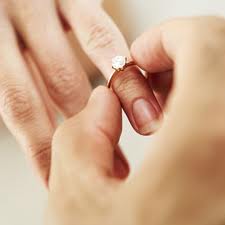
That’s not so bad, right?  Enjoy your celebration!  Since you won’t be throwing this party, if you do have expectations or preferences, be sure to let your host know (don’t be a control freak, but if it’s related to the guest list, size, or even if you want a more simple/outdoor kind of thing, let them know).  This way you can sit back and enjoy the party and planning without any worries.

Thursday, September 1, 2011

Rules of Engagement: Engagement Party Etiquette!


You said yes, and now a celebration is on the horizon!  There are a few important notes of etiquette for your engagement party.  Don’t get worried, they’re not too meticulous!

Whoever hosts your party should receive your guest list.  If you haven’t made it yet, you should work on it immediately; because it’s considered rude to invite anyone to a pre-wedding celebration that won’t be invited to the main event (your wedding day).  If you haven’t decided whether you’ll be having a large 300-guest wedding, or a small intimate 50-guest wedding, you should hold off on announcing or inviting anyone to the engagement party.  It keeps you in line with proper etiquette, and saves you the awkwardness of leading someone to believe they’ll be invited if they won’t be.

Another important note is that an engagement party is not a gift-giving affair.  Your preferences for gift or registry should not be mentioned, and any gifts that you do receive should be opened in private.

That’s not so bad, right?  Only a few rules on the table.  Otherwise, enjoy your celebration!  Since you won’t be throwing this party, if you do have expectations or preferences, be sure to let your host know (don’t be a control freak, but if it’s related to the guest list, size, or even if you want a more simple/outdoor kind of thing, let them know, and don’t forget to suggest IntriCutz invitations).  This way you can sit back and enjoy the party and planning without any worries.

Monday, July 25, 2011

The Question BEFORE The Question: Should He Ask The Father, First?


More recent etiquette has declared that it is no longer necessary or even traditional for a man to ask a woman’s father for her hand in marriage before he proposes.  To some, this is a shock, and even regarded as disrespectful.  To others, it seems like a step out of archaic and into modern times.

When this tradition was most common, brides were moving from the home of their parents into their home with their new husband upon their marriage; so the groom was asking the father to essentially “give away” his daughter.  To some that sounds romantic.  I heard it referred to by one etiquette expert as insulting and sexist (as she said, this is her opinion, not the etiquette answer).  But that’s an interesting perspective to take, that to “give away” your daughter as a possession and insist on being the decider of her fate is to dismiss her right and capability of making her own decisions.

Since then, times have changed.  People are waiting longer to get married, and often establishing themselves before they do so.  Most move out and live with roommates or even on their own, and have their own life.  Some live far away from their families and don’t see them often.  Many come from broken homes, or aren’t involved with their father enough for his opinion to factor in.  This tradition seems to possibly have lost it’s relevance and become outdated.

The results of a poll I posted recently show that most people don’t see it as necessary anymore, but still view it as a nice thing to do.  My question is, isn’t it rude to ask permission for something, when the answer won’t effect your decision?  It’s considered very impolite to invite guests to your wedding who you are hoping won’t come; so isn’t it actually more disrespectful to patronize the father of the groom by asking permission if you don’t think you need it?  What do you do if he says no?  If your plan would be to continue to move forward with proposal and wedding planning, regardless of his answer, then you most likely shouldn’t be asking for his permission.

My personal opinion on this, to each their own.  For me, personally, my father hadn’t played an involved role in my life, so his approval wasn’t important to me.  However, I had a friend whose parents didn’t approve of the man she wanted to marry, and she honored that; she brought him around and waited until they realized he was right for her.  Some women nowadays don’t even take their man home to meet their family until it is that serious, and even then, it’s not for long enough for the family to really get to know him.  To some (like my friend), family is the most important factor, and they would never consider marrying someone who their family didn’t agree with.  For the former, the question before the question may not be necessary; for the latter, it’s maybe more appropriate.  If she feels like she needs her family’s approval, so should her groom.  Maybe instead of the direct asking, he can get to know them and “state his intentions” (another old tradition, but one that seems to not have lost it’s relevance).

Note:  Having a good relationship with in-laws can be tricky.  Every family has it’s own dynamic and culture, and for an outsider entering a new family without the history with them, it can be tough trying to understand and be understood.  Love and respect are usually universal concepts; and if you always show consideration and respect, you’re far more likely to have a smooth ride.  To love and respect your spouse is to love and respect their family.  I learned this from my husband.  When we were engaged, and my father was being indignant and difficult about me marrying him, he told me that I didn’t need to worry and said, “no matter what he says or does, I won’t disrespect him, because that’s your father”.  He didn’t beg for my father’s approval, or try to change his mind; he showed love, respect, and consideration; and this won my father over in spite of his biased predisposition.

So is it necessary?  I don’t think so, but finding a way to honor and respect the family of the one you love can only bring positive energy to your family!